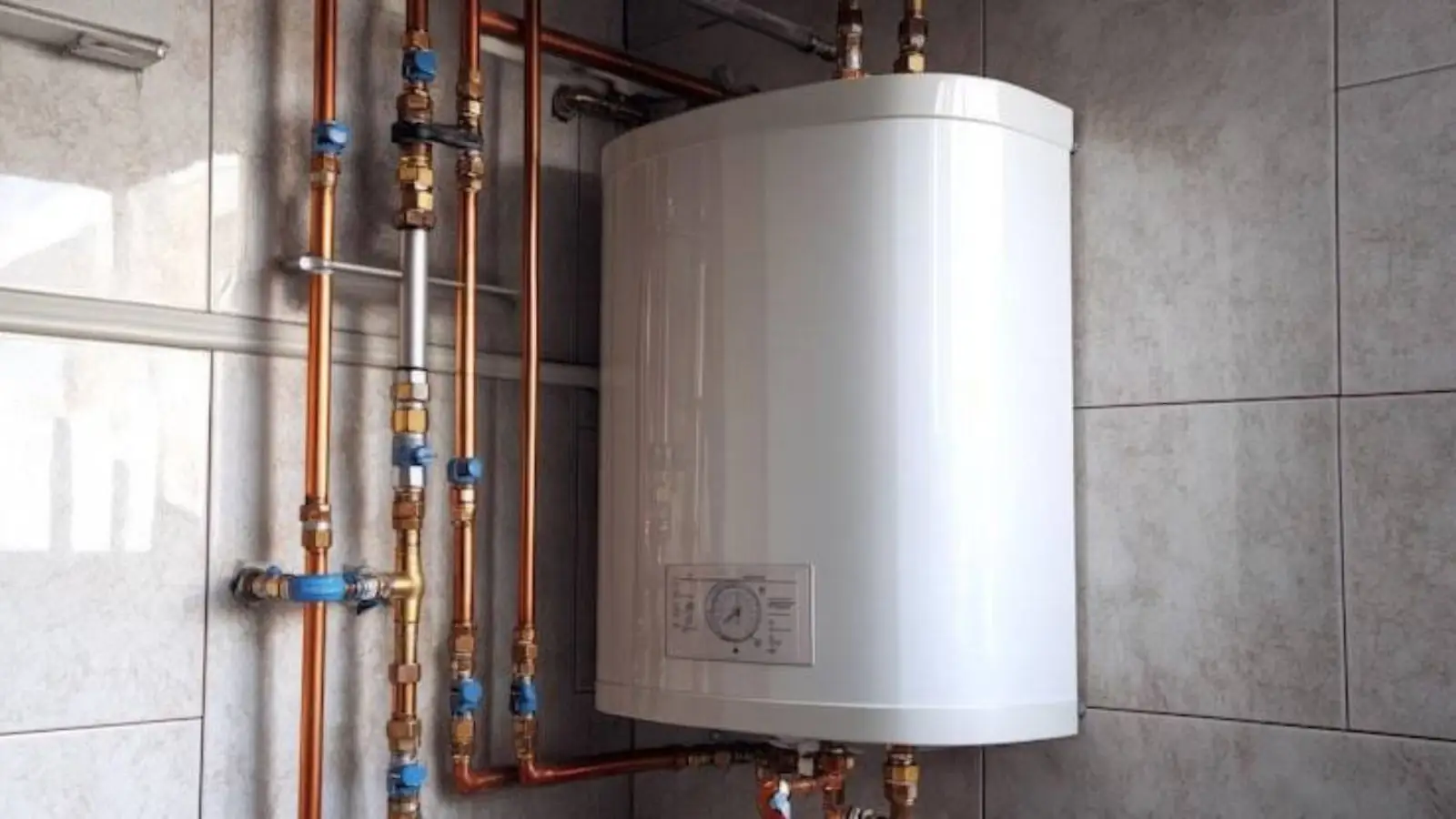
How a leaking water heater floods a house
A standard tank holds somewhere between 40 and 80 gallons, and a failed seam lets most of it out in one go. Slow leaks are just as common. A dripping fitting, a weeping drain valve or a relief valve that keeps discharging can soak the floor for weeks before anyone looks.
Where the tank sits decides how bad the damage gets. Heaters in garages mostly wet a slab and the bottom of the walls. Heaters in hallway closets, upstairs laundry rooms or utility rooms on a wood floor send water into subfloor, baseboards and the room next door. The water is usually clean supply water at first, but it picks up dirt and softens materials the longer it stays.
What a wet heater area is telling you
| What you see | What it usually means | First move |
|---|---|---|
| Water spreading from the base of the tank | Tank wall has rusted through or a seam has failed | Shut the cold inlet, cut power or gas to the unit, then call dispatch |
| Steady drip from a pipe near the top | A loose or worn fitting, or a supply connector | Close the cold inlet and keep a bucket under it until a plumber arrives |
| Water running from the relief valve discharge pipe | Pressure or temperature is too high, or the valve is worn | Leave it alone, turn the heater control down, and call a plumber |
| Rust-colored puddle that keeps returning | Slow tank corrosion or a failing drain valve | Mark the puddle edge, recheck it later, and book a plumber |
| Soft baseboard or bubbling paint on a nearby wall | Water has wicked into the wall from a leak you did not see | Call for moisture mapping before you paint or patch |
| Ceiling stain under an upstairs heater | Water has gone through the floor framing | Stay clear of sagging drywall and call right away |
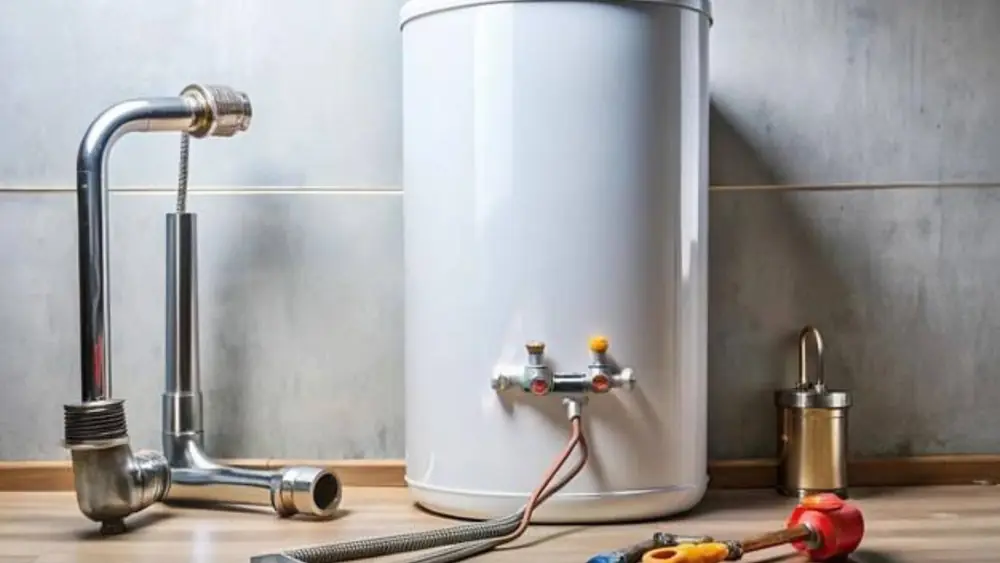
Safety steps for the first hour of a water heater leak
- Stay out of the room if water is near outlets, a power cord or the heater's electrical box.
- Turn off the cold water inlet valve on top of the tank, and the main shutoff if you cannot find it.
- Turn off the breaker for an electric heater only if you can reach the panel on dry ground. Otherwise call Snohomish County PUD.
- For a gas heater, set the gas control to off if it is safe. If you smell gas, leave the house and call 911, then Puget Sound Energy.
- Do not open hot taps or touch the relief valve, since water near the top of the tank can scald.
- Call a plumber for the tank and our line for the water, in either order.
Hot water is the part people forget. A burst tank can release water hot enough to burn skin, so wait and watch before you wade in. Once the room is safe, move boxes and stored items off the floor and photograph everything for your insurer.
Water pooling around the heater?
Call the 24/7 line and describe the room.
Drying the closet, the slab and the walls beside it
Our crews extract standing water with portable pumps and wet vacuums, then pull baseboards and check the bottom of each wall. A moisture meter and a thermal camera show where water went past the visible stain. Heater rooms often hide wet insulation and wet drywall that looks fine from the surface.
Air movers push dry air across the floor and the base of the walls. LGR dehumidifiers pull moisture out of the room so it does not settle into cabinets or carpet in the next room. Drywall and insulation that stayed wet are often removed instead of dried, and that depends on how long they sat and what they are made of.
We work to the ANSI/IICRC S500 water damage standard, and you can ask any company whether its crews do the same. Drying typically takes a few days, with readings each visit, and the crew stays out of the way of the plumber. The tank, the gas line and the electrical connection are the plumber's and electrician's jobs, and we schedule around them. If the leak ran long, the mold remediation page explains what follows when moisture lingers.
The plumber, the permit and the strapping
According to the City of Mukilteo's permit page, you need a plumbing permit to install or replace a water heater. Ask your plumber who is pulling it before the old tank comes out. Electrical work on the unit is handled through Washington L&I rather than the city, so a new circuit has its own permit path.
Washington's state plumbing code also requires water heaters to be anchored or strapped against earthquake motion. A tank that is not strapped can tip and tear its own connections, which turns a small leak into a flood. When the new unit goes in, check that straps sit in the upper and lower thirds of the tank, and ask the installer to confirm.
Drying can often start while you are still lining up a replacement. A wet floor does not wait for a permit, so call us for the water and your plumber for the tank at the same time. If the closet shares a wall with the living space, our emergency water removal crew can begin extraction before the new heater arrives.
What moves the price of a heater leak job
- How much water came out and how long it sat before shutoff.
- The floor type: concrete dries fast, while wood, laminate and carpet over pad take more work.
- How many wall bases, cabinets or neighboring rooms got wet.
- Whether drywall and insulation can stay or have to come out.
- The number of drying days and how many fans and dehumidifiers the room needs.
- Access to the heater space, which can be tight in a closet or crawl-in utility room.
Scope and price explained before work starts is how we handle it. A fast call usually shrinks the job, because less water has time to travel. The reverse is just as true for a leak that ran all weekend.
Sudden failure, slow leak, and your policy
The Washington Insurance Commissioner explains that sudden and accidental leaks are usually covered, while gradual leaks usually are not. A tank that splits open on a Tuesday is a different claim from a fitting that dripped for a season. Check your policy and ask your insurer which one your situation looks like.
The same state guidance warns that coverage can suffer if you delay repairs. Report the leak quickly, photograph the area, and keep any failed part for the adjuster to see. Nobody here can promise what your insurer will decide, but a clear record of dates and photos helps you ask for what the policy provides.
Mistakes to avoid after a heater leak
- Waiting to see if the puddle stops by itself.
- Re-lighting or powering up a heater that sat in water.
- Mopping the floor and closing the door on a wet wall base.
- Throwing out the old tank or fittings before photos are taken.
- Painting over a stain before the wall has been measured dry.
- Skipping the earthquake straps when the new unit goes in.
If your heater sits near a shared wall, a second-floor unit or a neighbor's space, the damage may not stay yours. Our Everett service area and Lynnwood service area pages explain how we cover nearby towns, and the same crews work homes across Mukilteo. For a closet leak near finished flooring, the water damage repair page covers what the rebuild looks like once everything is dry.
Frequently asked questions
Yes. Dispatch is open 24/7 and a same-day response is offered when crews are available. Call (425) 592-3399, tell us where the heater sits, and shut the cold inlet if you can reach it safely.
No. A licensed plumber replaces the tank and handles gas and water connections. We extract the water, dry the framing and flooring, and schedule around the plumber so neither job slows the other.
The City of Mukilteo says a plumbing permit is needed to install or replace a water heater. Your plumber normally handles it. Electrical work goes through Washington L&I, so ask about that too.
Leave the house right away and call 911 and Puget Sound Energy from outside. Do not flip switches or use a phone inside. Call us only after the gas company says the home is safe.
Sudden and accidental failures are often covered, and slow leaks often are not. Policies differ, so check yours and ask your insurer. Report quickly, because the Washington Insurance Commissioner notes that delayed repairs can hurt coverage.
Shaking and bumping can pull on fittings. State plumbing code requires tanks to be strapped against earthquake motion, so loose or missing straps are worth checking. A plumber can inspect the connections and the straps.
Still have a question? Call (425) 592-3399, any hour.