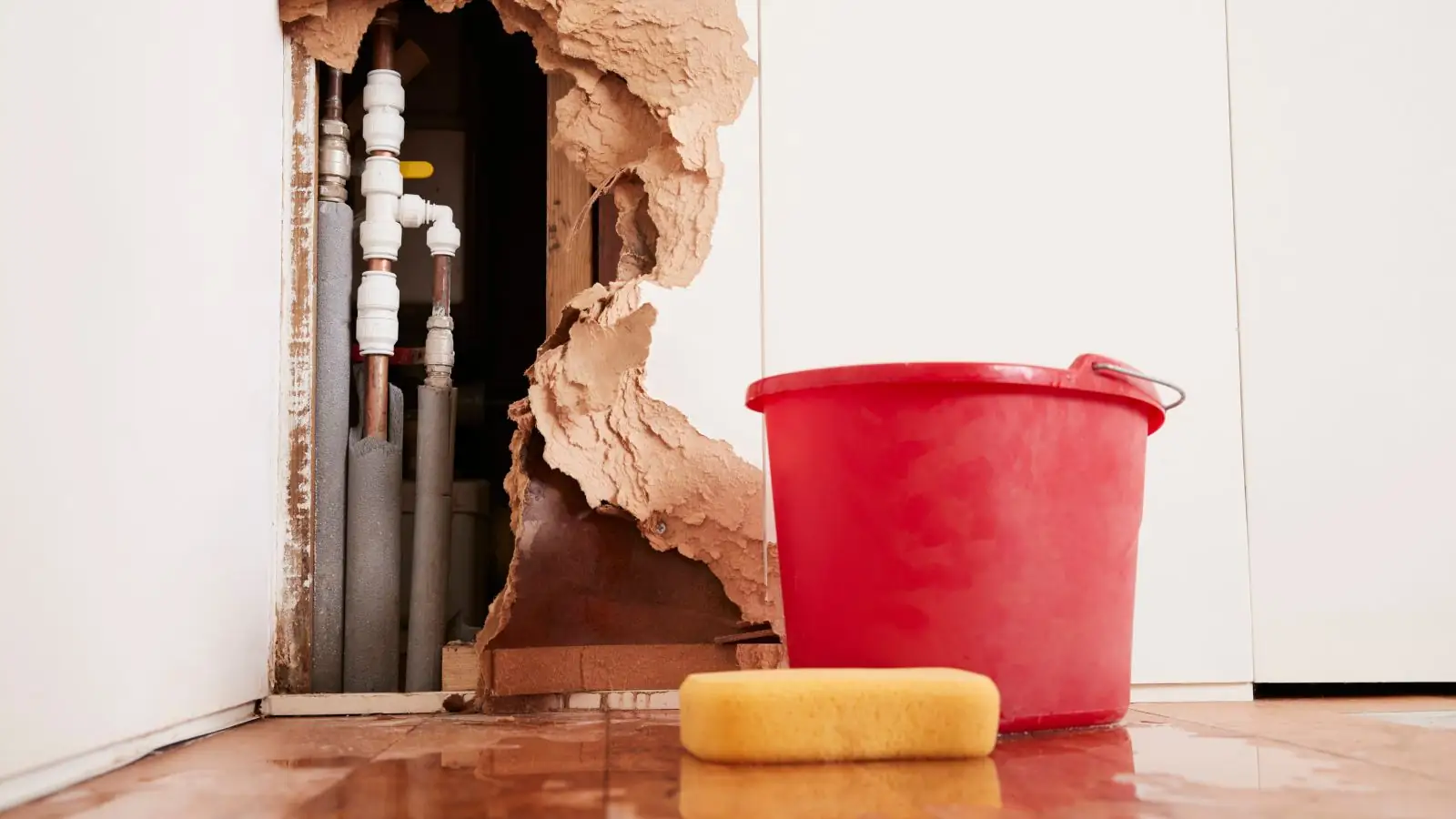
How a burst pipe floods a Mukilteo house
A burst pipe is any pressurized supply line that splits, pops a fitting or opens a pinhole while the water is on. In homes around Mukilteo the usual culprits are a failed compression fitting under a sink, a PEX crimp ring that slipped, a copper elbow with a pinhole, or a braided washer hose that finally gave out. The line runs at street pressure, so even a small opening can push out gallons a minute.
Most of that water is clean when it leaves the pipe, which the industry calls Category 1. It does not stay that way. Once it soaks drywall, carpet pad and insulation, it picks up dirt and starts feeding microbes, so a fast extraction matters more than the neatness of the cleanup. Many Mukilteo homes are two-story, so water from an upstairs line often drops through the floor into the ceiling and walls below.
What you see and what it usually means
| What you see | What it usually means | First move |
|---|---|---|
| Water pouring from a wall, ceiling or cabinet | A pressurized line has split and is still flowing | Close the main shutoff, then open a faucet at the lowest point to drain the line |
| A brown stain spreading on the ceiling | Water has pooled above the drywall and is working through it | Stay out from under it, shut the water off, and call before the panel sags |
| Hissing or a running sound with every tap closed | A leak inside a wall or slab, possibly under pressure | Shut off the main and listen again. If the sound stops, the leak is on the house side |
| Warm or damp floor, or a cupped wood floor | A hot-water line is leaking under the surface | Turn off the water heater supply and the main, and keep the floor uncovered |
| Peeling paint or bubbled wallpaper | Moisture is moving through the wall, often for hours already | Mark the edge of the wet area with a pencil so you can see if it grows |
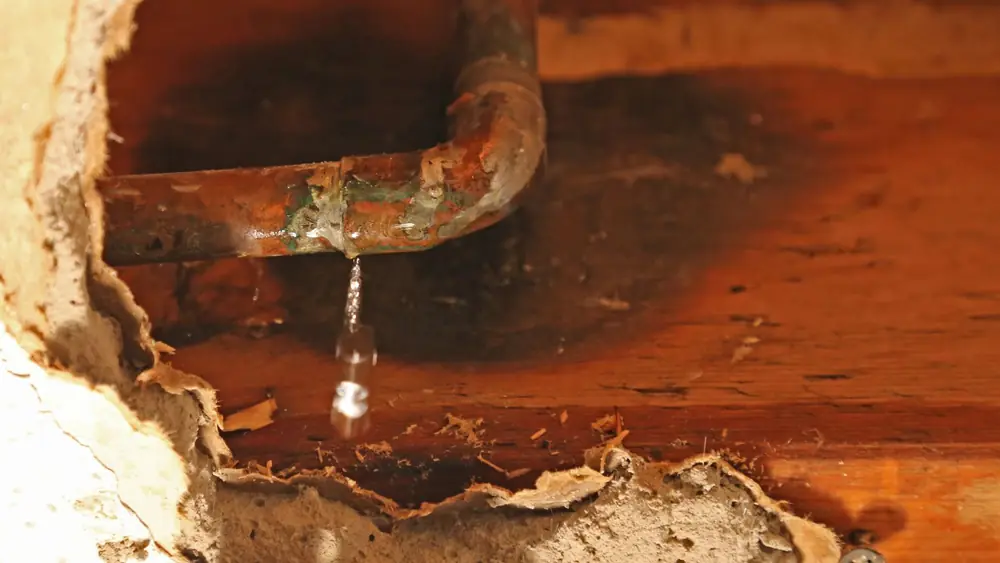
Safety steps for the first hour of a burst pipe
- Shut off the water at the main valve. It is often in a basement, garage or utility closet, and the handle or lever turns a quarter or a full turn.
- If the water is near outlets, a panel or anything plugged in, do not stand in it. Cut power only if you can reach the panel while standing on dry ground.
- If you smell gas, leave the house and call 911 and Puget Sound Energy from outside before you call us.
- For sparking, buzzing or a dark ceiling over light fixtures, call 911 or Snohomish County PUD first. Do not switch those lights on.
- Call a plumber for the repair. Our crew removes water and dries the building, but we do not fix pipes.
- Do not touch a bulging ceiling, walk under it, or poke it to release the water.
Water still running? Stop it, then call
Dispatch is open around the clock, and the scope and price are explained before work starts.
Finding the shutoff and testing for a hidden leak
Alderwood Water and Wastewater District's published guidance says the meter box usually sits near the street side of the property line in a ground-level cement box. It also says the shutoff valve should have an arrow pointing toward your property when the water is on. If you live in a different district, ask your own water utility where its meter and valve sit before you need them.
The same guidance describes a simple leak test. Turn off every fixture, then watch the meter's leak indicator. If it keeps moving, close your main valve and look again.
When the indicator stops, the leak is inside the house. When it keeps going, the loss is between the meter and the building, and a plumber should trace it. That test is useful after a burst too, because a second weak spot can hide behind the first.
The district also says it owns the service line from the main to the meter, while the property owner owns the section from the meter to the building. So a failure on the house side of the meter is yours to arrange and repair. Water that is clearly on the street side is a call to your utility.
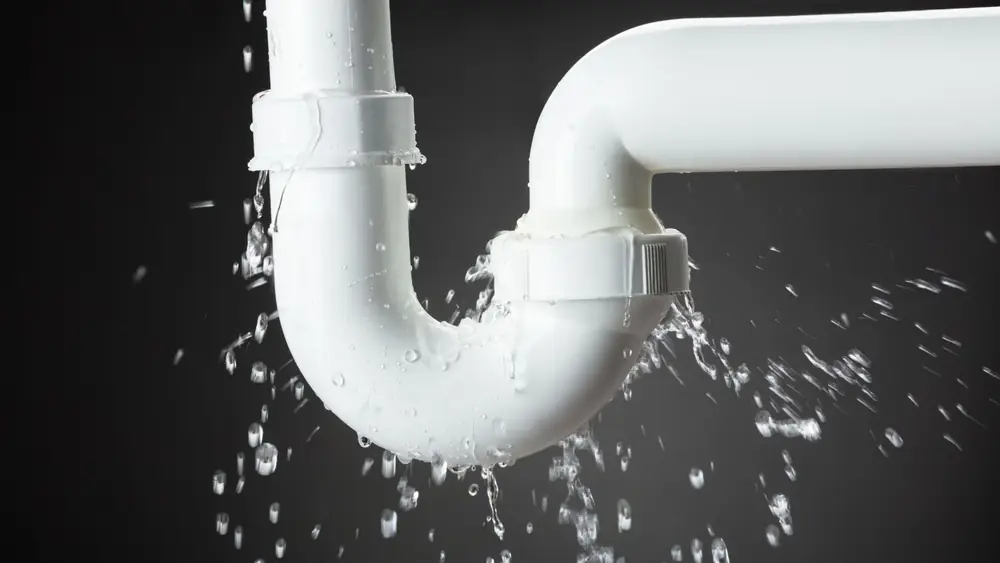
How the crew gets the building dry
First comes extraction. Truck-mounted or portable extraction units pull standing water from hard floors and carpet, which cuts the amount of moisture the air movers have to deal with later. A thermal camera then shows cool, wet areas behind walls and under ceilings, and a moisture meter confirms how deep the wet reaches in drywall, framing and subfloor.
Air movers push dry air across wet surfaces, while LGR dehumidifiers pull the vapor out of the room so it does not settle somewhere else. Where a wall cavity stays wet, a crew may cut small openings or lift baseboards to get air inside. Wet insulation and soaked drywall are often removed rather than dried, and that depends on what the readings show.
Readings are repeated each visit until the materials return to normal levels. Drying typically takes a few days, depending on materials and conditions. You can ask any company whether its crews follow ANSI/IICRC S500, the published standard for water damage restoration. The first hours are covered on our water mitigation page.
What changes the cost of a burst pipe job
- How long the water ran before the main was closed
- How many rooms and floor levels the water reached, including rooms below
- Whether the water stayed inside the floor system or got into wall cavities and the ceiling
- Flooring type, since hardwood, laminate and carpet over pad each dry differently
- How much drywall and insulation must be removed instead of dried
- The number of days equipment has to stay running
We explain the scope and price before work starts, so you can compare it against your policy and decide. Quick action usually keeps more of the structure in place.
Where insurance fits
The Washington Insurance Commissioner says a standard homeowners policy usually covers burst pipes, including frozen pipes, as long as you heat your home properly. The same office says insurance will not cover water damage if you delay repairs, and that sudden leaks should be reported to your insurer quickly. A slow drip that went unnoticed for months is treated very differently from a pipe that split yesterday.
Check your policy and ask your insurer what it requires. Take photos before anything is moved, and keep damaged samples if you discard materials. We cannot promise what a carrier will approve or pay.
Mistakes that make a burst pipe worse
- Waiting for the plumber before closing the main valve
- Running a household vacuum on wet carpet, which is an electrical risk
- Leaving wet cabinets, rugs or boxes against wet walls
- Turning the heat off to save energy while the building is wet
- Covering wet flooring with plastic, which traps moisture
- Putting off the insurance call until the repair is done
Serving Mukilteo and the towns next door
Burst pipes do not stop at city lines, and neither does our dispatch. If you are just north in Everett, the Everett service area page lists what we cover there. Homes along the water to the south are covered through the Edmonds service area. In all three places the first request is the same: stop the water, then call.
Once the building is dry, the water damage repair team can rebuild what had to come out. For standing water right now, see emergency water removal. Call (425) 592-3399 any hour.
Frequently asked questions
Yes. Dispatch runs 24/7, and calls are handled as same-day response when available.
Shut off the main valve first, then call (425) 592-3399 so a crew can plan extraction and drying.
A licensed plumber repairs the pipe, fitting or hose. Our crews remove the water, dry the structure and coordinate around the plumber so neither job slows the other.
Alderwood Water and Wastewater District's guidance describes turning off all fixtures and watching the meter leak indicator. If it stops after you close your main, the leak is inside the house.
If you are served by another district, ask it how its meters work.
Sometimes. Drywall that was wet for a short time and tests dry on a meter can stay. Drywall that stayed soaked, sagged or crumbled is often removed.
A moisture meter and thermal camera reading decides it, not guesswork.
Water district rules differ on who owns which part of the service line. We only quote Alderwood's published guidance here, so call your own utility to ask where your meter, valve and ownership line sit.
The Washington Insurance Commissioner says burst pipes are usually covered when the damage is sudden and accidental and you heat your home properly. Delay can hurt a claim.
Check your policy and ask your insurer. We cannot promise approval.
Still have a question? Call (425) 592-3399, any hour.