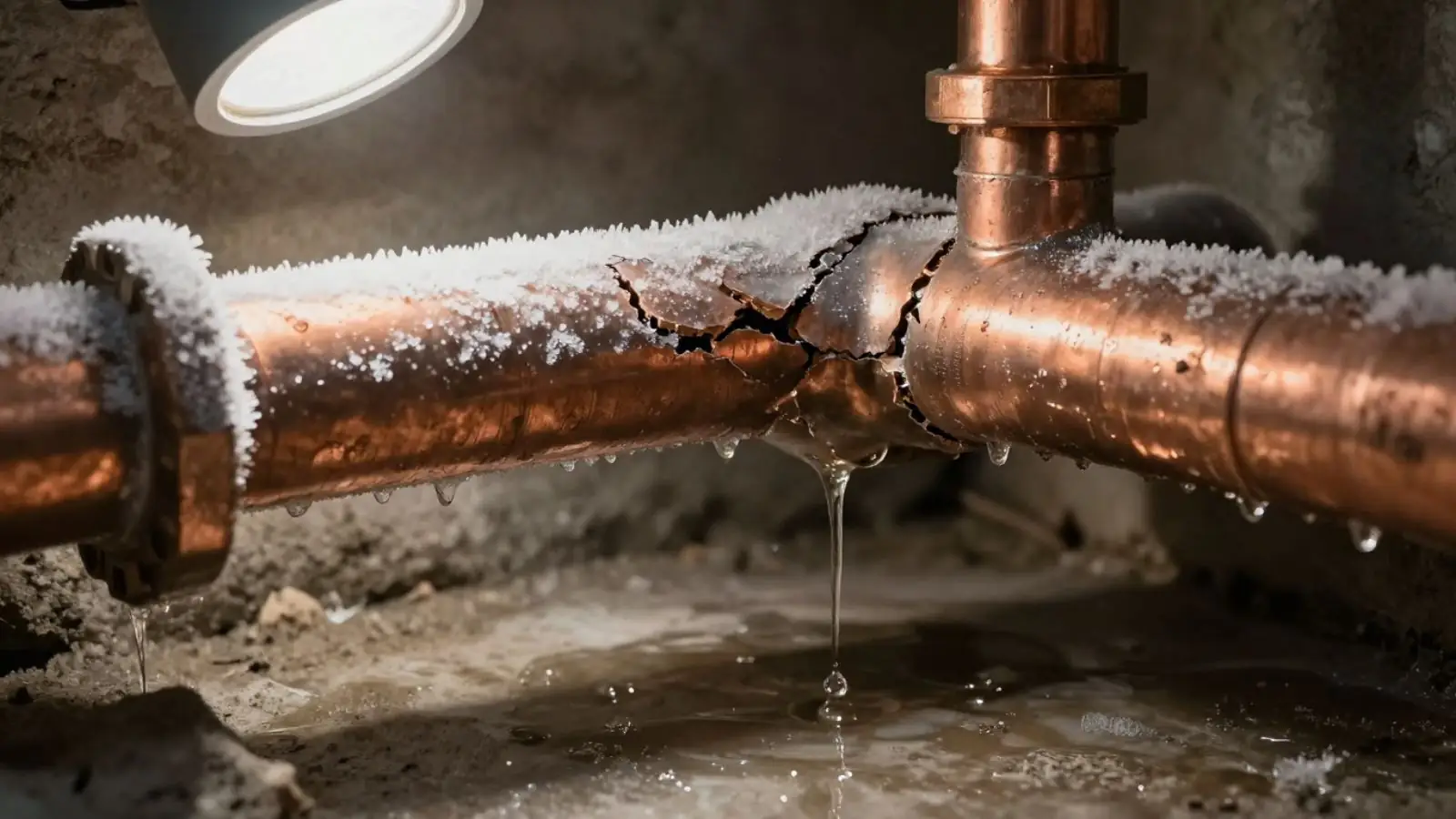
Frozen pipes in a mild climate
Freezing is not a daily worry here the way it is in Minnesota or Montana. Most winters on the Puget Sound shoreline bring only a handful of hard-freeze nights, and many homes were never built with deep cold in mind. That is exactly why a freeze catches people off guard, since the pipes are often routed through spaces nobody insulated.
The weak spots are predictable: crawl spaces, detached garages, exterior walls on the north side, outdoor hose bibs and unheated additions or bonus rooms. Ice expands inside the pipe and can split it along a seam or push a fitting apart. You usually do not see anything until the ice melts and water starts moving through the crack.
How often it actually gets cold enough
NOAA's 1991 to 2020 climate normals for the Everett Snohomish County airport station at Paine Field show an average of 28.8 days a year with a low at or below 32 degrees. Those days cluster in December at 8.3, January at 7.3 and February at 6.6. So if you live in Mukilteo, the practical step is to walk your crawl space and garage in November, before the December nights arrive.
Cold weather is not always a long, steady freeze, either. The Office of the Washington State Climatologist reported freezing rain across the Puget Sound region on December 23, 2022, with western Washington running 1 to 6 degrees below normal that month. A few unusual nights are enough to catch an unprepared pipe, which is why a plan for the next one is worth having.
Clues that a freeze has hurt a pipe
| What you see | What it usually means | First move |
|---|---|---|
| No water or only a trickle from a faucet on a cold morning | Ice is blocking a line, and it may be cracked already | Open the faucet, leave the heat on, and do not use a flame to thaw it |
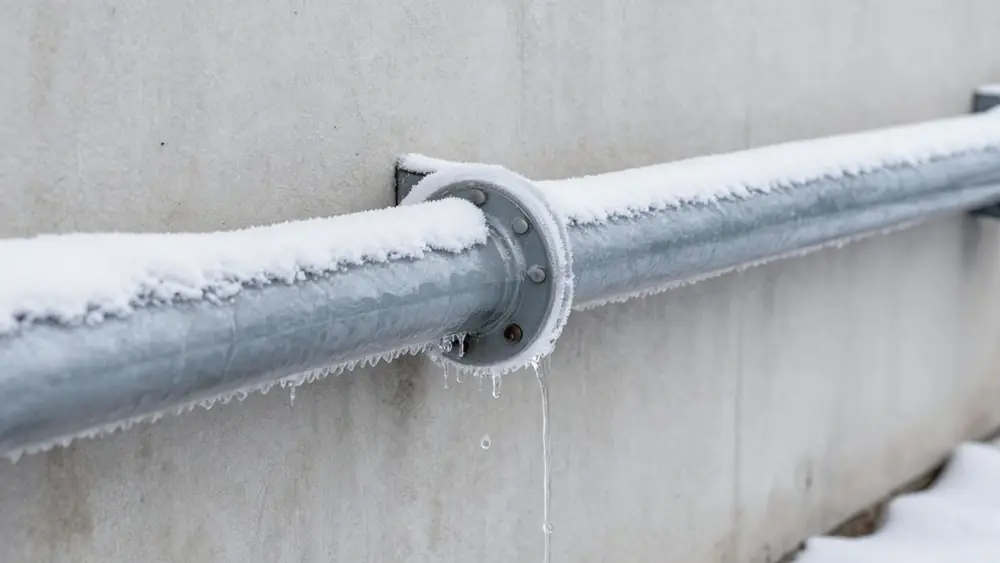
| Frost on an exposed pipe or a bulging section | Ice is forming and the pipe is under strain | Warm the room gently and have a plumber look before it thaws |
| Water appears at a wall, ceiling or crawl space as the day warms | The pipe split and the thaw released the flow | Close the main valve now and call |
| A stained ceiling under a bathroom or attic run | A supply line above has split and is wetting the framing | Shut the main off and stay clear of a sagging panel |
| A dripping outdoor spigot, or water inside the wall behind it | The hose bib froze and cracked back into the wall | Close the interior valve for that line and check the wall surface |
Pipe cracked after the cold night?
Shut the water off at the main and call. The scope and price are explained before work starts.
Safety steps when the thaw begins
- Close the main water valve before you do anything else. Take the handle all the way to the stop.
- Keep the heat on and open the cabinet doors under sinks on exterior walls so room air can reach the pipes.
- If water is near outlets, a breaker panel or a ceiling fixture, keep out of it. Cut power only if you can reach the panel while dry.
- If you smell gas or something sparks, leave, then call 911 and Puget Sound Energy or Snohomish County PUD from outside.
- Never use a torch, a propane heater or an open flame on a frozen pipe. A hair dryer on low is the most you should try, and only on a pipe that is not yet leaking.
- Call a plumber for the repair. We do not fix pipes, but we coordinate with the plumber.
What our crew does once the water is running
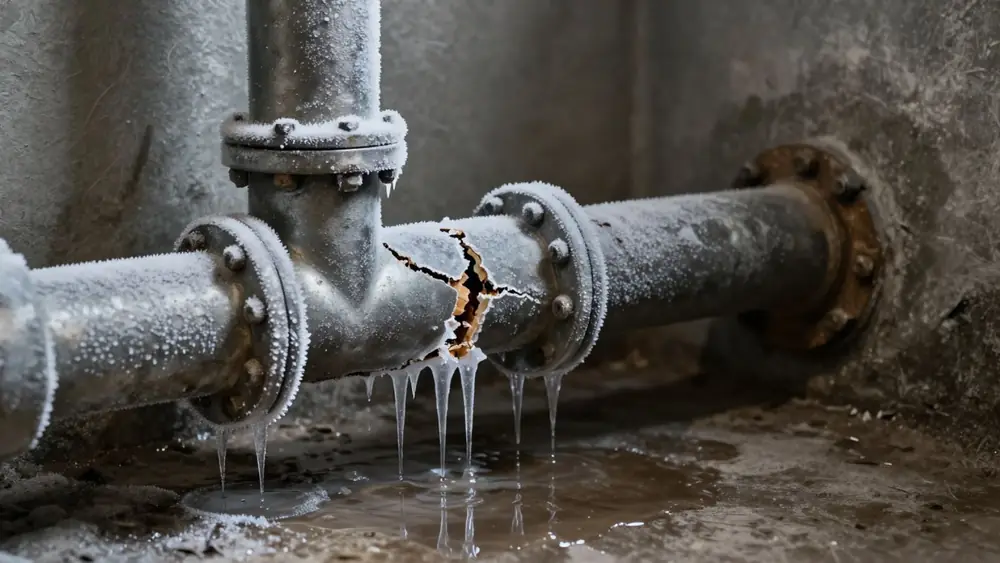
A frozen-pipe leak is often in a place nobody was looking, so the first job is finding where the water went. A thermal camera highlights cooler, wet surfaces behind drywall and in ceilings, and a moisture meter confirms how deep the wetness runs in studs, plywood and subfloor. Standing water goes out through extraction units.
After that, air movers drive dry air across wet surfaces and LGR dehumidifiers pull moisture from the air. Insulation soaked in a wall or crawl space is often removed, because it holds water and dries slowly. If a ceiling is already sagging, that section usually comes down so the cavity can dry properly.
Readings guide when the equipment comes out. Typically a few days, depending on materials and conditions. You can ask any company whether it works to ANSI/IICRC S500, the published standard for water damage restoration. Our water damage cleanup page covers the removal and sanitizing work that follows.
What drives the cost after a freeze
- How long the pipe ran after the thaw before someone noticed
- Whether the break was in an open crawl space or inside a finished wall
- How many rooms and levels the water reached
- How much insulation, drywall or flooring has to come out
- Whether the vacant or seasonal home sat unattended for days
- How many days the equipment needs to run
A break caught quickly usually costs far less than one found after a weekend away. We explain the scope and price before work starts, so you see the numbers first.
Frozen pipes and your policy
The Washington Insurance Commissioner says homeowners coverage usually includes burst pipes, frozen pipes among them, as long as you heat your home properly. That condition matters, because a home left unheated for a long stretch may be treated differently. Check your policy and ask your insurer what it expects, then photograph the damage before anything is cleared out.
Prevention before the next cold snap
Alderwood Water and Wastewater District's published frost guidance says to take hoses off outdoor spigots, because water trapped in the faucet can freeze and burst the pipe. It also points to draining or covering spigots, blowing out irrigation lines and sealing cold-air gaps. Customers of another district should ask their own water utility for its advice.
- Disconnect and store garden hoses before the first cold forecast
- Insulate pipes in the crawl space, garage and exterior walls
- Seal gaps where cold air reaches pipes, such as vents and cable holes
- Let a faucet drip on the coldest nights if the pipe runs along an outside wall
- Leave heat on at 55 degrees or warmer when you travel
- Learn where your main shutoff is, so you can reach it in the dark
Beyond Mukilteo
Lynnwood sits on a plateau roughly 300 to 600 feet above Puget Sound, so check your own pipes rather than assuming the shoreline forecast applies. Our crews cover homes there through the Lynnwood service area. The Everett service area page lists the neighborhoods we reach to the north.
If water has already soaked the structure, early water mitigation keeps the damage from spreading. Call (425) 592-3399 any hour.
Frequently asked questions
Yes. Dispatch runs 24/7, with same-day response when available.
Close the main water valve first, then call (425) 592-3399 so a crew can plan extraction and drying.
Not often, and many winters bring only a few hard-freeze nights. But NOAA's Paine Field normals show 28.8 freeze days a year on average, mostly December through February.
Unheated crawl spaces, garages and hose bibs are where trouble starts.
Ice can plug a crack and hold it shut. When it thaws, the water pressure returns and flows out of the split. That is why a pipe may seem fine overnight and flood a room at midday.
Only if it is not leaking, and only with gentle warmth like a hair dryer on low. Never use a flame. If you see any water, close the main valve and call a plumber.
It can. The Washington Insurance Commissioner ties burst pipe coverage to heating your home properly, so a long period without heat may matter to a claim.
Read your policy and ask your insurer before you decide anything.
Walk the crawl space, garage and north-facing exterior walls, since NOAA counts the most freeze days in December. Look for bare pipe, gaps and hoses still attached to spigots.
Still have a question? Call (425) 592-3399, any hour.