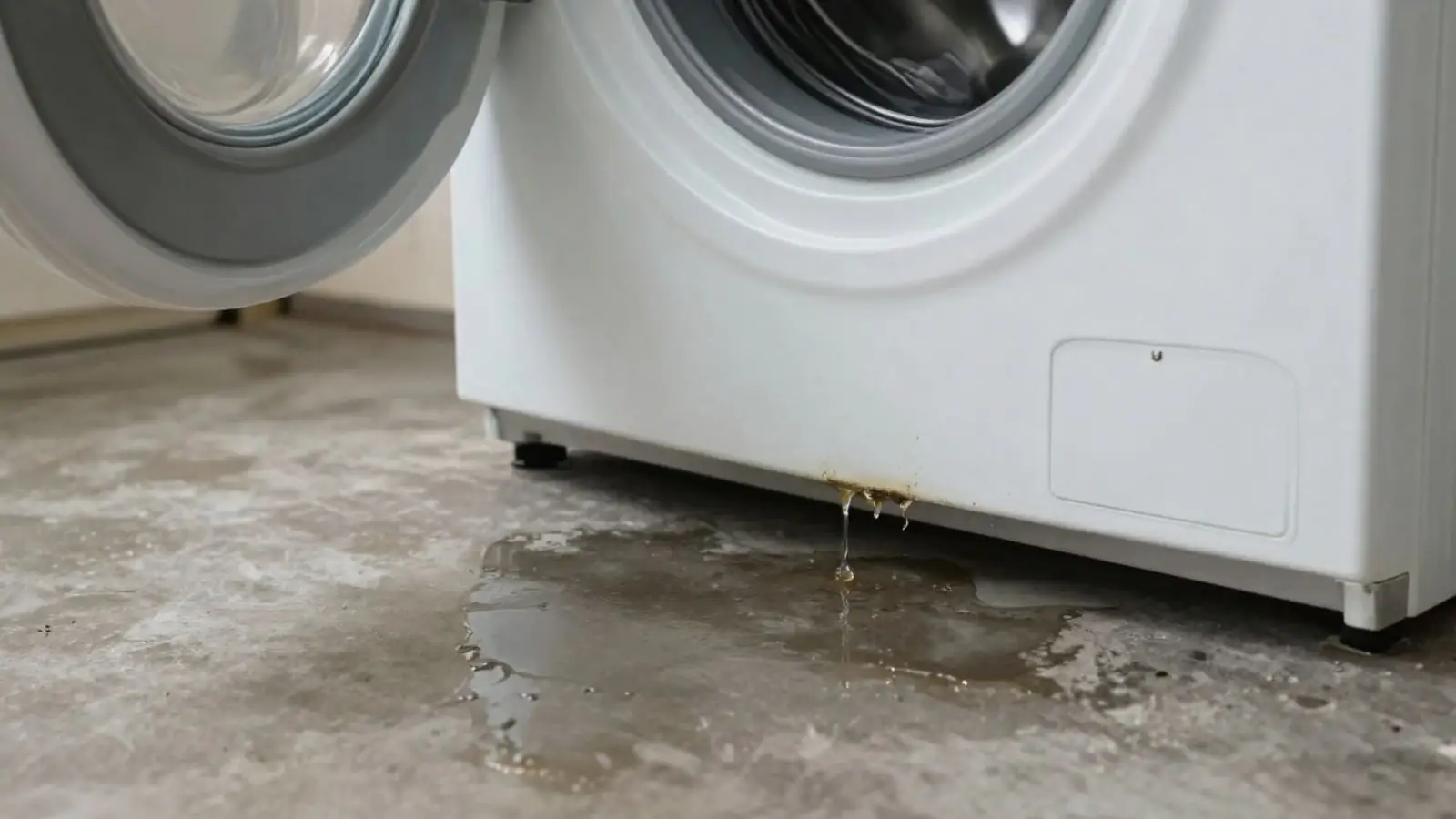
When the machine is the source of the water
Most households run at least three water-fed machines: a clothes washer, a dishwasher and a refrigerator with an ice maker. Each one hangs off a small supply line, and each one pushes used water back out through a drain hose. Those hoses, clamps and valves are the weak points, not the big steel box in front of you.
The failure type tells you what kind of damage to expect. A burst washer hose pours out gallons in minutes. A pinched ice maker line weeps for months behind the fridge. A dishwasher door gasket that fails mid-cycle sprays a thin film that spreads further than it looks. Knowing which of these you have shapes how we plan the drying.
Reading the leak by the machine that caused it
| What you see | What it usually means | First move |
|---|---|---|
| Water pooling in front of a washer after a cycle | Drain hose slipped off the standpipe or the drum seal is worn | Pull the plug if you can reach it dry, close both washer valves, and call |
| Floor puddle after the dishwasher runs | Door gasket, pump seal or drain hose fault | Stop the cycle, switch off the dishwasher breaker, and mop the surface |
| Damp or warped flooring behind the refrigerator | Ice maker or water-line kit has been seeping | Close the valve behind the fridge and pull the unit out carefully |
| Musty smell in the laundry area but no puddle | Slow seep from a washer box or hose connection | Request moisture mapping before the smell turns into a stain |
| Ceiling stain under an upstairs laundry | Overflow or hose burst that went through the floor | Shut the washer valves and keep everyone away from the sagging area |
| Water at the wall box behind a stacked unit | Cracked supply valve or corroded washer box | Close the main shutoff and call a plumber for the box |
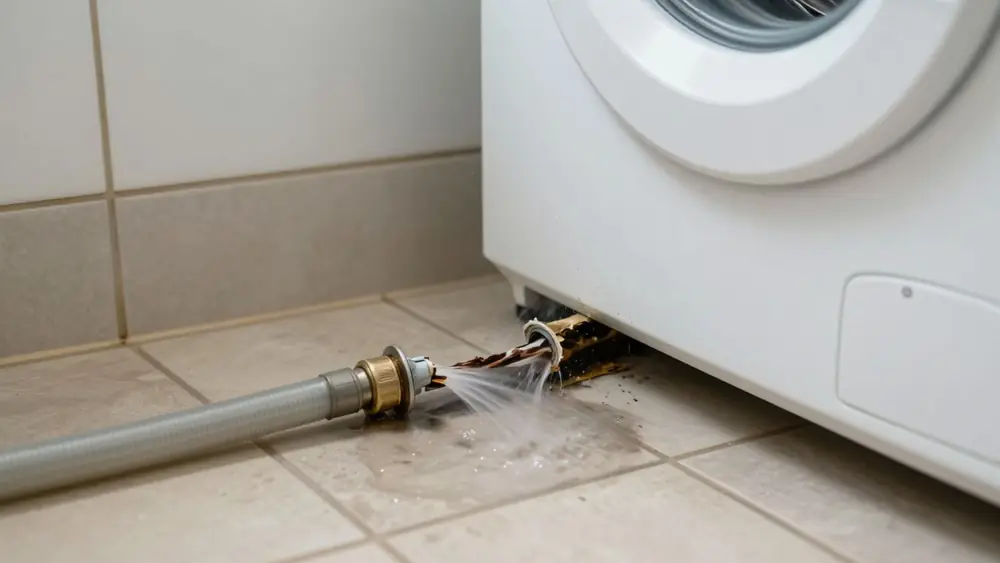
Safety steps for the first hour after an appliance leak
- Close the machine's own supply valve, usually a small knob or lever behind or beside it. If it will not turn, shut the home's main water valve.
- Unplug the appliance only if the outlet and cord are dry. If water is near the outlet, leave it and stay back.
- Turn off the circuit at the panel only if you can reach it standing on a dry surface. Otherwise call Snohomish County PUD.
- Smell gas near a dryer or range? Go outside, call 911, then call Puget Sound Energy.
- Do not tilt or drag a heavy machine through standing water, since cords and hoses can pull loose.
- Call a plumber or appliance technician for the machine and our dispatch line for the water.
If you rent, tell your landlord or property manager right away. Census Bureau data lists the owner-occupied rate in Mukilteo at 70.6 percent, which leaves roughly three in ten occupied homes as rentals. For a rental, the landlord usually decides who to call, so get that notice in writing before work starts.
Appliance still dripping?
Call and tell dispatch which machine failed.
What the water from each machine carries
Industry categories matter here. Fresh water from a supply line is Category 1. Water that came out of a dishwasher or washing machine is Category 2, which means it holds soap, food residue, lint or body soil and is handled with more care. If Category 2 water sits on porous material for a day or two, the material may need to come out instead of being dried.
That is why a quick call matters even when the puddle looks small. EPA guidance says water-damaged areas and items should be dried within 24 to 48 hours to prevent mold. Carpet pad, particleboard and insulation near a washer lose the race first.
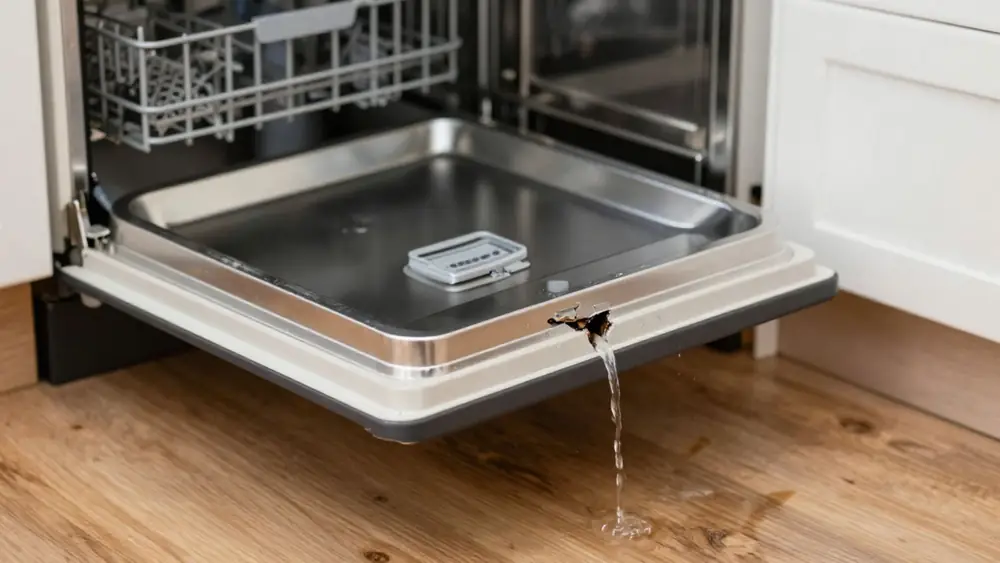
How we dry out after an appliance leak
We begin by tracing the water. A moisture meter and a thermal camera show how far a leak traveled under flooring, behind baseboards and into the wall under the machine. Appliance leaks often spread sideways under vinyl or laminate where nothing shows on top.
Extraction units pull standing water, and air movers keep dry air moving across the floor. LGR dehumidifiers take the moisture out of the air so it cannot settle again. Flooring under a washer may be lifted in sections so the subfloor can dry from above, and the crew sets a plan based on the material and how long it stayed wet.
We follow the ANSI/IICRC S500 standard for water damage, and you can ask any company whether its crews do the same. Daily readings tell us when a wall has reached normal. Our water mitigation page explains the first 24 to 72 hours in more detail, and the water damage repair page covers rebuilding once things are dry.
Condos, shared walls and the unit below
A washer on the second floor of a townhome or a condo can leak into someone else's ceiling. Tell the neighbor below quickly and invite them to photograph their own damage. Your building's association may have its own rules about who handles shared structure, so ask the manager before anyone opens a wall.
We can document moisture levels in your unit and coordinate access when a neighbor's space is involved. Homes in Lynnwood and Edmonds have the same pattern, and our Lynnwood and Edmonds pages explain how nearby coverage works.
What drives the cost of an appliance leak job
- How long the leak ran before anyone noticed.
- Whether the water was clean supply water or Category 2 discharge.
- The type of flooring under and around the machine.
- How far the water reached into walls, cabinets and the floor below.
- The number of drying days and how much equipment the space needs.
- Whether a section of wall or flooring has to be removed to reach hidden moisture.
Scope and price explained before work starts means you see the plan before the equipment arrives. A one-time hose burst and a long hidden seep are priced very differently, so we describe what we find instead of guessing over the phone.
Coverage when a machine fails
The Washington Insurance Commissioner says a policy usually covers sudden and accidental leaks, while gradual seepage is another story. A hose that bursts today and a line that dripped all winter may be treated differently. Check your policy and ask your insurer what applies, because the damage and the failed part may be handled separately.
State guidance also says your coverage can suffer if you delay repairs. Report the loss quickly, keep the failed hose or valve, and photograph the area before anything moves. Nobody can promise an outcome, but a clean record makes your side of the conversation easier.
Preventing the next appliance leak
- Replace rubber washer hoses with braided stainless lines and check them for bulges.
- Pull the washer out once a year and look at the box, the valves and the floor.
- Turn the washer valves off when the home will be empty for a few days.
- Check the dishwasher gasket and the drain hose connection under the sink.
- Look behind the refrigerator for damp flooring or a kinked ice maker line.
- Put a drain pan or a leak sensor under any machine on an upper floor.
Frequently asked questions
Yes. Dispatch runs 24/7 and a same-day response is offered when crews are available. Call (425) 592-3399 and name the machine, and close its supply valve if you can reach it safely.
Washer hoses that burst release the most water fastest. Slow ice maker and dishwasher leaks do their damage over time, hidden under flooring. Either type needs moisture readings, since the surface rarely shows the full picture.
Industry standards treat that discharge as Category 2, which holds soap, soil and residue. It calls for more careful cleanup than clean supply water. If it sat on carpet pad or particleboard, those parts may need removal.
Tell the landlord or property manager right away and keep a written record of the date. Census Bureau data shows roughly three in ten occupied homes in Mukilteo are rentals, so this is common. The landlord usually decides who does the repairs.
No. An appliance technician or plumber fixes the machine and its supply valve. We extract water, dry the floor and walls, and coordinate our visits so nobody waits on the other.
Shut off the machine's water, tell the neighbor and your property manager, and photograph both sides. Then call us so moisture can be measured in the ceiling and wall. Do not poke holes in a bulging ceiling without help.
Still have a question? Call (425) 592-3399, any hour.